
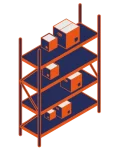
In warehouse logistics and order preparation, there are several systems designed to improve efficiency and reduce processing times. Two of these technologies are “pick to light” and “put to light,” which, although similar in name, have different purposes and workings. Therefore, it is essential to recognize the difference between pick to light and put to light.
Understanding the differences between these systems is crucial for companies seeking to optimize their logistics processes and improve productivity in their warehouses. Choosing the right system can significantly influence operational efficiency and customer satisfaction.
Order preparation systems in modern logistics
Modern logistics has undergone a significant transformation in order preparation thanks to the implementation of advanced systems. These warehousing systems have improved efficiency and accuracy in warehouses, enabling companies to meet customer demands more effectively.
The evolution of warehouse picking systems
Picking systems have evolved considerably over the years. Initially, the picking process was carried out manually, which led to a high risk of errors and low efficiency. As a result, some of the relevant changes have been:
- Implementation of manual picking systems
- Introduction of technology-assisted picking technologies
- Development of automated picking systems
The impact of technology on logistics efficiency
Technology has had a significant impact on logistics efficiency. Order preparation systems, such as the pick-to-light system, have improved the accuracy and speed of the process.
Some of the key features of these systems include:
- Light indicators that guide workers
- Integrated inventory management systems
- Data tracking and analysis capabilities
What is a pick-to-light system?
In logistics, efficiency in order preparation is crucial, and one of the most effective systems for achieving this is pick-to-light. This system uses indicator lights to guide workers through the picking process, ensuring that the correct products are picked quickly and accurately.
Basic operation of pick-to-light
The operation of pick-to-light is relatively simple. When an order arrives at the warehouse, the system informs workers which products to pick and in what quantities. Lights turn on at the specific locations of the products, indicating to workers what they need to pick.
Main components of a pick-to-light system
A pick-to-light system consists of several key components. These include indicator lights, which are the most visible element of the system; management software that controls operations and com
Un sistema pick to light consta de varios componentes clave. Estos incluyen las luces indicadoras, que son el elemento más visible del sistema; un software de gestión que controla las operaciones y comunica las instrucciones a los trabajadores; y sensores que pueden estar presentes para confirmar las acciones de picking.
| Component | Description | Function |
| Indicator lights | LED devices that light up to indicate the location of products to be picked. | They guide workers to the products they need to pick. |
| Management software | A computer system that manages orders and communicates instructions to workers. | It coordinates the picking process and ensures that orders are fulfilled efficiently. |
| Sensores | Dispositivos que detectan y confirman las acciones de picking realizadas por los trabajadores. | Verifican que los productos hayan sido recogidos correctamente. |
Technical characteristics of pick-to-light
Pick-to-light systems are usually highly customizable and can be integrated with other warehouse management systems. They offer a number of benefits, including faster picking, fewer errors, and improved overall warehouse productivity.

What is a put-to-light system?
Put-to-light systems are designed to guide warehouse workers in placing products in their designated locations quickly and accurately. These systems use indicator lights to signal the exact location where products should be placed, thereby reducing errors and increasing efficiency in the storage process.
Basic operation
The basic operation of a put-to-light system involves the activation of lights at specific storage locations. When a worker receives a product to store, the system illuminates the corresponding location, indicating where the product should be placed.
Main components
The main components of a put-to-light system include indicator lights, a central controller, and sensors. The indicator lights provide the visual signal for the storage location. The central controller manages the storage instructions and coordinates the indicator lights.
Technical features
The technical features of a put-to-light system can vary depending on the manufacturer and model. However, they generally include an intuitive user interface, integration with other warehouse management systems, and high accuracy in location indication.
| Feature | Description | Function |
| Indicator lights | Provide visual cues for storage location | Reduce storage errors |
| Management software | Manage storage instructions and coordinate lights | Improves storage efficiency |
| Sensors | Detect the presence of products in locations | Increase inventory management accuracy |
Difference between pick to light and put to light: fundamental aspects
Understanding the differences between pick to light and put to light is essential for optimizing logistics processes. Although both systems are used in order preparation, they have different objectives and workings.
Workflow direction in both systems
Workflow direction is one of the main differences between pick to light and put to light. The pick-to-light system guides operators in selecting products from shelves to boxes or preparation areas, while put-to-light directs the flow of products to specific storage locations or order consolidation areas.
This difference in workflow direction has a direct impact on the efficiency of the logistics process.
Operational objectives of each system
The operational objectives of pick to light and put to light also vary significantly.
- Pick to light focuses on speeding up the picking process, reducing preparation times, and minimizing errors.
- Put to light, on the other hand, focuses on ensuring that products are placed in the correct locations efficiently.
Differences in physical configuration
The physical configuration of pick-to-light and put-to-light also differs. Pick-to-light requires specific installation in picking areas, with indicator lights on the shelves. Put-to-light, on the other hand, requires a configuration that allows for precise indication of storage or consolidation locations.
Advantages and disadvantages of the pick-to-light system
The pick-to-light system has revolutionized the way warehouses are managed, offering a number of significant advantages. This order picking system uses indicator lights to guide operators through the picking process, improving efficiency and reducing errors.
Main benefits of pick-to-light
Among the main benefits of pick-to-light are improved productivity and reduced errors. By guiding operators directly to the products that need to be picked, the time spent searching for products is minimized and order preparation speed is increased.
Some of the key features of pick-to-light include:
- Light indicators that guide operators.
- Integration with warehouse management systems (WMS).
- Real-time tracking and reporting capabilities.
| Feature | Description | Benefit |
| Light indicators | Guide operators to products. | Improves efficiency. |
| Integration with WMS | Synchronize data in real time. | Reduce errors. |
| Real-time tracking | Monitor picking progress. | Optimize the process. |
Difference between pick to light and put to light: fundamental aspects
Understanding the differences between pick to light and put to light is essential for optimizing logistics processes. Although both systems are used in order preparation, they have different objectives and workings.
Workflow direction in both systems
Workflow direction is one of the main differences between pick to light and put to light. The pick-to-light system guides operators in selecting products from shelves to boxes or preparation areas, while put-to-light directs the flow of products to specific storage locations or order consolidation areas.
This difference in workflow direction has a direct impact on the efficiency of the logistics process.
Operational objectives of each system
The operational objectives of pick-to-light and put-to-light also vary significantly.
- Pick-to-light focuses on speeding up the picking process, reducing preparation times, and minimizing errors.
- Put-to-light, on the other hand, focuses on ensuring that products are placed in the correct locations efficiently.
Differences in physical configuration
The physical configuration of pick-to-light and put-to-light also differs. Pick-to-light requires specific installation in picking areas, with indicator lights on the shelves. Put-to-light, on the other hand, requires a configuration that allows for precise indication of storage or consolidation locations.
Advantages and disadvantages of the pick-to-light system
The pick-to-light system has revolutionized the way warehouses are managed, offering a number of significant advantages. This order picking system uses indicator lights to guide operators through the picking process, improving efficiency and reducing errors.
Main benefits of pick-to-light
Among the main benefits of pick-to-light are improved productivity and reduced errors. By guiding operators directly to the products that need to be picked, the time spent searching for products is minimized and order preparation speed is increased.
Some of the key features of pick-to-light include:
- Real-time tracking and reporting capabilities.
- Light indicators that guide operators.
- Integration with warehouse management systems (WMS).
| Beneficio | Descripción | Impacto |
| Error reduction | Visual guide for correct product storage. | Improves storage accuracy. |
| Improved efficiency | Optimizes storage time. | Increases staff productivity. |
| Flexibility | Adaptable to different products and orders. | Facilitates the management of product diversity. |
Limitations and challenges of the put-to-light system
Despite its benefits, the put-to-light system also presents some challenges. Among the most common limitations are:
- It requires a significant initial investment in technology and training.
- It may require adjustments to existing warehouse processes and layouts.
- Dependence on technology, which can be a problem if technical failures occur.
In summary, although the put-to-light system offers numerous benefits, it also presents challenges that must be considered and managed appropriately to ensure successful implementation.
Use cases and practical applications
The implementation of order picking systems such as pick-to-light and put-to-light has revolutionized modern logistics, enabling companies to significantly improve their operational efficiency.
These systems offer innovative solutions for warehouse management, reducing preparation times and minimizing errors. Below are the optimal scenarios for implementing each of these systems.
Optimal scenarios for implementing pick to light
The pick to light system is ideal for warehouse environments where high speed and accuracy are required in order preparation. Some of the optimal scenarios for its implementation include:
- Warehouses with a high volume of orders that require fast and accurate preparation.
- Environments where accuracy is crucial, such as in the pharmaceutical or food industry.
- Picking operations involving a wide variety of products.
Optimal scenarios for implementing put to light
On the other hand, the put-to-light system is particularly useful in situations where orders need to be consolidated in specific areas of the warehouse. Optimal scenarios for its implementation are:
- Order consolidation operations where high efficiency is required.
- Warehouses that handle a large volume of merchandise and need to optimize space.
- Situations where order preparation cycle time needs to be reduced.
Examples of companies using these systems
Several companies have successfully implemented pick-to-light and put-to-light systems. Some examples include:
- Logistics and distribution companies that have seen significant improvements in their operational efficiency.
- Online stores that require fast and accurate order preparation.
- Manufacturing industries that need to optimize their warehousing and distribution processes.
Conclusion
The main difference between pick-to-light and put-to-light lies in their workflow direction and operational objectives. While pick-to-light focuses on preparing orders quickly and accurately, put-to-light focuses on order consolidation and verification. At Atox, we have everything you need to implement either of these types of systems.
If you want to take your warehouse to the next level, don’t miss our article on the types of automated warehouses and their advantages. Click here to discover how these systems can revolutionize your business.