
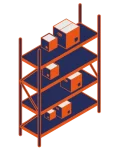
The storage of heavy products is a fundamental challenge in various industries, from logistics to manufacturing and construction. Having an adequate system not only guarantees product safety, but also improves operational efficiency and optimizes available resources.
There are multiple systems designed to support heavy loads, each with specific characteristics that can influence a company’s final decision. What is the best storage system for heavy products? In this article, we will explore the most notable options and the criteria that should be considered when choosing the best alternative.
Key characteristics of heavy product storage
Selecting the right storage system is not just about choosing a sturdy structure; it involves considering multiple aspects that will affect the operability and safety of the storage space. From load capacity to system accessibility, each feature defines the functionality and efficiency of the logistics process. Therefore, the main ones are:
Load capacity and strength
To ensure the integrity of stored heavy products, it is essential to have a robust infrastructure. The strength of the system and its load capacity will determine whether products can remain safe without compromising the stability of the facility. This factor allows you to recognize how much weight different types of shelving can support.
For example, industrial shelving and storage racks are designed to withstand heavy loads thanks to materials such as reinforced steel and structures designed to distribute weight efficiently. In addition, aspects such as resistance to impact, vibration, and environmental conditions must also be considered to ensure the durability of the system.
Space optimization and accessibility
Beyond structural strength, the ability to take advantage of available space and ease of access to products are key elements in selecting an efficient storage system. A system that ensures proper distribution of goods improves operations and reduces risks.
Systems such as mobile racks, high-bay storage, and automated systems facilitate the handling of heavy products and improve workflow within warehouses and distribution centers. Accessibility is key to reducing operating times and improving safety in the handling of goods.

Types of heavy product storage systems
Each industry has specific storage needs, which has led to the development of different systems that meet the requirements of each company. From traditional shelving to advanced automated storage technologies, knowing the options available makes decision-making easier:
Heavy-duty industrial shelving
Industrial shelving has been a reliable solution for storing heavy products, providing versatility and stability. Depending on the type of load and the space available, different configurations can be chosen to maximize warehouse efficiency.
Selective shelving allows direct access to each load, while the drive-in system optimizes space by eliminating unnecessary aisles. Cantilever racking is ideal for long products such as pipes and metal profiles. The choice between these systems will depend on the type of load and the company’s operational strategy.
Automated systems for heavy storage
Companies looking to optimize their storage processes are adopting advanced technologies that reduce manual intervention and maximize space efficiency. Automated systems represent a major evolution in inventory management and goods storage.
These systems include technology such as automated guided vehicles (AGVs), robotic racks, and automated vertical storage systems. Automated systems reduce human intervention in the handling of heavy products, minimizing risks and improving accuracy in the storage and retrieval of goods.
Criteria for choosing the best storage system
Selecting the right system is not based solely on load capacity or the type of technology used; other factors such as costs, safety, and operating regulations play an essential role in business decision-making. Evaluating each aspect will ensure an efficient investment aligned with business objectives.
Costs and return on investment
Profitability is a key aspect for any company, especially when it comes to long-term investments such as a storage system. Understanding the relationship between costs and benefits will allow you to make the right decision and avoid unnecessary expenses.
Automated solutions tend to have a high initial cost, but they can significantly reduce operating costs and increase productivity. On the other hand, conventional shelving requires less initial investment and offers a robust solution without the need for advanced technology.
Safety and regulatory compliance
In addition to profitability, safety and regulatory compliance are essential in any storage environment. A proper system must comply with safety regulations to prevent accidents and ensure a safe working environment.
Aspects such as structural strength, fire protection systems, and inspection protocols must be considered. Compliance with specific regulations in each country is crucial to avoid penalties and ensure the safe storage of all types of products.
Work automation with heavy product storage systems
Automation in industrial warehouses has revolutionized the way companies manage heavy products. The integration of advanced technologies not only reduces manual labor, but also improves accuracy and safety in operations.
Robots and automated handling systems
The use of robots in industrial warehouses has eliminated repetitive and dangerous processes for workers. Systems such as robotic arms and automated guided vehicles (AGVs) can transport heavy products quickly and efficiently.
Robotic arms are especially useful for loading and unloading heavy goods, minimizing the risk of injury to operators. On the other hand, AGVs move autonomously in the warehouse, optimizing transport routes and reducing operating times.
Inventory management and control software
In addition to physical automation, the digitization of heavy product storage is key to improving efficiency. Warehouse management systems (WMS) enable precise inventory control, improving logistics planning.
With a WMS, companies can monitor the status of stored products in real time, predict demand, and manage the optimal location of each item. This reduces costs and improves the traceability of heavy products within the warehouse.
Conclusion
Selecting the best heavy product storage system will depend on several factors, including the type of goods, the space available, the need for automation, and the company’s budget. Regardless of the type of system you choose, remember that at Atox we have high-quality storage systems. Contact us!
If you are looking for a more efficient way to manage space in your warehouse, don’t miss our article on the types of stacker cranes suitable for your company. Click here to find out how to choose the best one.